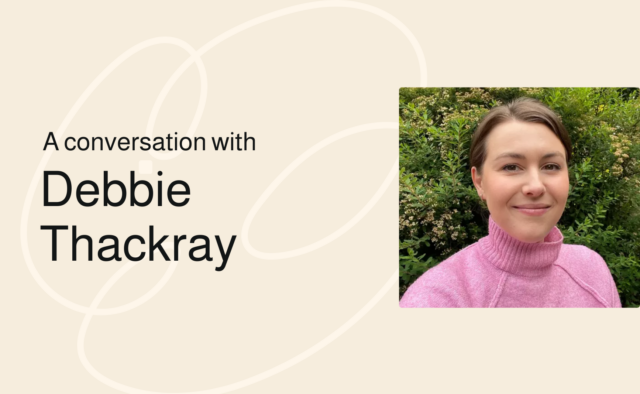
As part of our ongoing focus on women in leadership, we speak to Debbie Thackray, Impact Director at AG Impact. Having worked at B Lab UK, Debbie now advises companies on their ESG certification and impact journeys, bringing a unique perspective that spans standards, strategy and community.
In this conversation, she shares insights on the evolving B Corp standards, what founders can learn from impactful businesses, and how purpose-driven leadership can shape resilient organisations.
I now reframe the B Corp certification as an organisational design tool for change that builds better businesses — rather than just passing assessments for a badge."
You have been on “both sides of the certification” — at B Lab UK and now advising companies undergoing certification. What unique insights does that perspective give you?
I understand the intent, not just the rules. Working at B Lab UK taught me about the rigour and architecture behind the standards — what they’re designed to unlock and how they evolve over time.
During my time in the Community Team, I saw how the standards played out across an entire ecosystem of businesses trying to create change. When I started there were around 200 companies in the community; by the time I left there were over 2,000. I also worked with B Labs around the world, learning from the insights emerging in different communities.
That experience allowed me to recognise patterns; the different ways companies implement the standards, the common pain points, and the difference between work that genuinely creates value and what risks becoming performative.
Today, my role at AG Impact sits at the intersection of standards, community and strategy. I help translate complex standards into practical actions that align B Corp with strategy, culture and growth. We work to avoid the risk of treating certification as a tick-box exercise.
All of this means I now see B Corp certification as an organisational design tool for change that builds better businesses.
When supporting founders, I often hold a dual lens: the realities of running a business day-to-day, and the long-term systems needed to build resilience."
Your journey spans both the corporate and non-profit worlds before becoming Impact Director at AG Impact. How does that experience inform the way you support founders through the B Corp journey?
Early in my career I had the opportunity to work directly for the owners of a large corporate who were also investors in SMEs. That gave me a front-row seat to how decisions are made in growing businesses – from governance and risk to responding to external pressure.
Seeing those dynamics up close means that when I support founders today, I understand the realities of strategic growth, leadership and shareholder expectations.
Moving into the non-profit sector added another important layer. It shifted my thinking toward systems thinking, stakeholder governance and the intrinsic value of behavioural change as a tool for structural resilience.
When I work with founders now, my focus is on building systems and tools that allow their mission and purpose to authentically guide their performance; so that purpose and growth reinforce one another rather than compete.
Impactful businesses embed impact thinking into decision-making — it’s rarely treated as a separate initiative."
Having worked with a wide range of companies, what common patterns do you see in impactful businesses that smaller founders can learn from?
Impactful businesses embed impact thinking into their decision-making. It’s rarely treated as a separate initiative, which means it becomes a consistent behaviour regardless of employee turnover.
This usually starts with leadership. Leaders model accountability and create permission for others to do the same, ensuring that purpose becomes operational rather than aspirational.
They also recognise that impact extends beyond their immediate teams. They consider their entire value chain and make thoughtful decisions for all stakeholders – something SMEs sometimes assume is only necessary if a larger corporate requires it.
These companies ask uncomfortable questions. They challenge norms and invest early in good governance, moving beyond ‘what good can we do?’ to asking ‘what risks should we be aware of, and how do we build a business that creates value for multiple stakeholders over the long term?’
From what I’ve seen, the earlier these habits form, the easier it becomes for companies to scale responsibly and embed impact principles into their growth.
Founders get the most value when they treat community spaces as forums for honest discussion rather than places to find perfect answers."
You now host forums like The B Club to support community learning around the new standards. What inspired you to create that space?
As the new B Corp standards were launched, it became clear that many founders were trying to make sense of what the changes meant for their businesses, not just technically, but strategically.
At AG Impact we were going through this journey ourselves, and my experience from the Community Team at B Lab had already shown me the power of shared learning.
Creating a space for community discussion felt like the natural next step. The goal was to bring founders together to share perspectives, ask practical questions and learn from others navigating the same changes.
What I’ve consistently seen is that founders gain the most value when they approach the space with curiosity and openness. Bring the questions you’re grappling with, share what you’re learning, and engage with the diversity of experience in the room.
It’s about continuous learning rather than worrying about being ‘behind’.
The biggest challenge for many SMEs isn’t the work itself - it’s having the systems to evidence and track it."
When reviewing an SME’s readiness for the new B Corp standards, what are the first three things you look for?
The first is leadership commitment and clarity of intent. The new standards place a much stronger emphasis on governance accountability, so it’s important to understand whether leadership genuinely sees impact as part of how the business is run.
The second is purpose maturity – how embedded purpose already is in the way the business operates. This means looking beyond mission statements to see whether purpose shows up in policies, decision-making and team management.
The third is the ability to evidence and track what the business is doing. Many SMEs are already doing meaningful work, but they don’t yet have the systems to document, measure and communicate it. Without that infrastructure, providing evidence during assessment becomes difficult.
The shift founders need to make is moving from passing requirements to building systems."
Many founders feel overwhelmed by the new compliance elements. How can they move from feeling intimidated to feeling confident and strategic?
The first shift is moving from thinking about passing requirements to thinking about building systems. Many of the new elements are really asking businesses to formalise things they already care about – such as how decisions are made, how employees are supported, or how impact is considered in strategy.
The second shift is recognising that this is a journey. The standards encourage continuous improvement, so it’s more helpful to focus on building the right structures over time rather than trying to solve everything immediately.
The third shift is seeing this as a tool for long-term resilience. The process can support stronger leadership, clearer accountability and more sustainable growth.
Breaking the work down into manageable steps helps progress feel tangible. When founders begin to see that progress mapped out, confidence replaces overwhelm.
The move away from points toward real progress will only strengthen businesses in the long term."
What do you think the new B Corp standards promise for the future of business?
“The new standards place a stronger focus on foundational behaviours that define truly responsible business. This means authenticity is rewarded, progress is expected and transparency becomes normalised.
This reflects the core principles of the Declaration of Interdependence and the wider movement. The move away from points toward measurable progress is particularly promising. It means companies will be engaging in continuous improvement in ways that strengthen resilience, governance and risk management.
For smaller founders, this is exciting because SMEs often have the agility to adapt quickly. Under the previous standards, many smaller businesses outperformed larger companies, and I believe we’ll see that continue.
Founders who prioritise strong culture, intentional governance and long-term thinking will be well positioned.
B Corp isn’t just a badge — it’s an operating system for your values."
What advice would you give to a female founder who is passionate about purpose but unsure whether B Corp certification is worth the investment?
The bar has been raised, and while that means the process is more demanding, it also provides greater clarity and resilience.
The new standards embed governance, risk awareness and accountability into the way a business grows. These are not trends – they’re frameworks designed to prepare companies for future regulation, stakeholder expectations and market volatility.
If you’re unsure about the investment, it helps to reframe certification as more than a marketing badge. It’s an operating system for your values, helping you build systems that support positive impact over time.
But it’s important to be honest about the commitment required. Certification involves culture, engagement, governance, transparency, data tracking and stakeholder accountability.
This work is rarely wasted. These are the systems future investors, partners, employees and regulators will increasingly expect; but the value only emerges if the commitment goes beyond simply obtaining the badge.
Purpose-led businesses succeed because they bring people with them."
How important is stakeholder engagement in the impact journey?
Purpose-led businesses don’t succeed in isolation. They succeed because they bring people with them – employees, customers, suppliers, investors and communities.
This principle sits at the heart of the Declaration of Interdependence and the wider movement. Meaningful impact cannot happen without the people a business affects.
In the new standards, stakeholder engagement is no longer optional. It’s woven through expectations around governance, human rights, fair work, climate action and justice, equity, diversity and inclusion.
For founders, stakeholder engagement also provides protection. It builds credibility, strengthens support for your vision and creates a community around your purpose.
A good starting point is mapping your ecosystem and identifying who your stakeholders are, what they value and how they want to engage. Then build those insights into your strategy and share updates on how feedback is shaping decisions.
People engage when they see their voice leads to real influence. Without visible action, engagement quickly becomes performative and trust can erode.
Looking for support to achieve B Corp certification, or feeling overwhelmed by recertification requirements? We’ve been proudly B Corp certified since June 2023 and have supported organisations from a wide variety of industries and sizes. Our experts are perfectly placed to support and guide you through every stage of the process from defining your strategy, to embedding and communicating your purpose.
Find out more about our services, book an introductory call here or contact us at hello@ag-impact.co.uk – we would love to hear from you!
Author details

Debbie Thackray
Impact Director