As organisations face rising scrutiny, shifting expectations and an increasingly volatile world, many leaders are unsure how to communicate their sustainability journey without risking backlash.
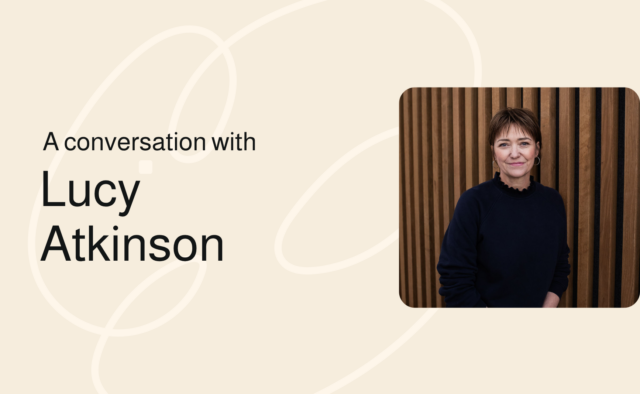
Ahead of our upcoming webinar Leaders’ Lens: Communicating your sustainability journey authentically and with confidence , we spoke with Lucy Atkinson, Executive Director, Communications & Impact at AG Impact, about why silence is no longer an option, what credible communication really looks like, and how leaders can build the confidence and judgement to speak clearly in uncertain times.
Lucy works at the intersection of communications, leadership and impact. Her work focuses on helping organisations align purpose, strategy and narrative so they can communicate with honesty, evidence and confidence.
Organisations need to show up through their actions, but doing this authentically and in a way that resonates today is tough. That’s why this conversation matters.
Q: You’re leading AG Impact’s upcoming session on communicating sustainability with authenticity and confidence. What is driving the need for this conversation right now?
Global conversation has shifted dramatically. Leaders are no longer simply asking how to improve their sustainability or DEI approach; many are questioning whether these topics are still relevant at all. At the same time, people are feeling increasingly overwhelmed by the news, workplace engagement is falling, and leaders are managing in a volatile world.
Despite this, sustainability action has never been more essential. It’s no longer a nice‑to‑have; it’s a must-have. My work is about helping organisations navigate the intersection of communications and impact, and this session will offer practical steps to help leaders move forward with clarity.
Q: Many organisations feel caught between pressure to speak up and fear of missteps. What are leaders struggling with most?
Many leaders are already doing far more than they realise, but they’re scared to speak up. When you have a clear purpose and a strategy aligned to achieving it, you can take confidence in your actions and engage more broadly — both internally and externally — while also reducing the risk of backlash. The challenge is recognising the work you’re already doing and communicating it in a grounded, credible way.
Q: Your webinar focuses on helping leaders communicate “credible commitments.” What does credibility mean in this context?
Credibility comes from alignment and honesty. It means ensuring your purpose, strategy, and sustainability objectives reinforce one another. It means understanding your stakeholders and the impact of your actions. It means saying what you will do and doing what you say. It also means being clear about what you can’t or shouldn’t say and being willing to share when things aren’t progressing as fast as you’d like.
Credibility isn’t about perfection — it’s about clarity, evidence, and consistency.
Q: Why can’t organisations stay silent anymore?
Organisations are judged by what they do, what they say, and how they act. Silence is a choice, but it won’t stop rising scrutiny, expectations, or regulation. The impact of getting it wrong can be material, and staying quiet doesn’t protect you from that. Organisations are better placed when they acknowledge this reality and respond proactively.
Q: Why does communication around sustainability have to start at the top?
Alignment of practice and purpose is one of the most important elements of a successful sustainability approach, and that starts with leaders. Leaders cast a long shadow, role‑modelling behaviour and shaping how people are treated and engaged. But sustainability delivery shouldn’t sit solely with leadership; it must be everyone’s accountability. When done well, it becomes a powerful way to engage people across the organisation.
Leaders need to stop thinking about sustainability as an add on to business delivery. It’s intrinsic to how an organisation operates. Managing it well makes your organisation stronger, more resilient, and, in many cases, improves your bottom line. Sustainability is better understood as risk management — something that should be woven through everything you do.
Q: How can leaders develop the judgement to know what is safe to say — and when?
We encourage leaders to use a simple matrix to map what’s safe to say and what to avoid. Judgement and confidence grow with time, so the key is to start small and stick to what you know and can evidence. Over time, as your understanding deepens and your systems strengthen, your ability to communicate more broadly will grow.
Q: How does internal culture influence whether sustainability communications feel authentic or performative?
Culture is one of the biggest drivers of employee engagement. People’s actions are shaped by what they see, hear, and experience from their leaders and managers. If sustainability is perceived as a tick‑box exercise, with words that don’t match action, it won’t feel authentic. Organisations with strong, positive cultures tend to care deeply about their people, their work and their impact — and that shows. When culture is less positive, it’s important to work from the inside out to help avoid potential backlash. BrewDog’s B Corp de‑certification is a clear example of what happens when culture and communication aren’t aligned…where employees contested the basis of original certification as at odds with their experience.
Organisations that communicate well do so regularly and with a clear plan. Their communication is backed by evidence and grounded in alignment around what they can and can’t say. Once these foundations are in place, confidence grows — and organisations can begin to be more creative in how they show up.
Q: What does good look like when organisations are challenged publicly?
The organisations that respond well tend to have leaders who share a unified voice, stick to the facts, and show humility when things go wrong. They don’t panic; they stay grounded in their purpose and their evidence.
Q: How should leaders navigate scrutiny from employees, customers and stakeholders?
If your house is in order, scrutiny can be a positive thing. It helps you stay focused on what matters and course correct when needed. Thinking through each stakeholder’s perspective — and planning the challenges they might raise — helps ensure your approach is well-rounded and defensible.
Organisations need to reframe sustainability communication as effective risk management. They need to focus on empowering and engaging their teams, not just setting strategic targets. Managers will be at the centre of this shift and equipping them will be crucial. Above all, organisations need to align plans, actions and evidence so they can communicate truthfully and with confidence.
To hear more from Lucy, join our upcoming webinar:
Leaders’ Lens: Communicating your sustainability journey authentically and with confidence
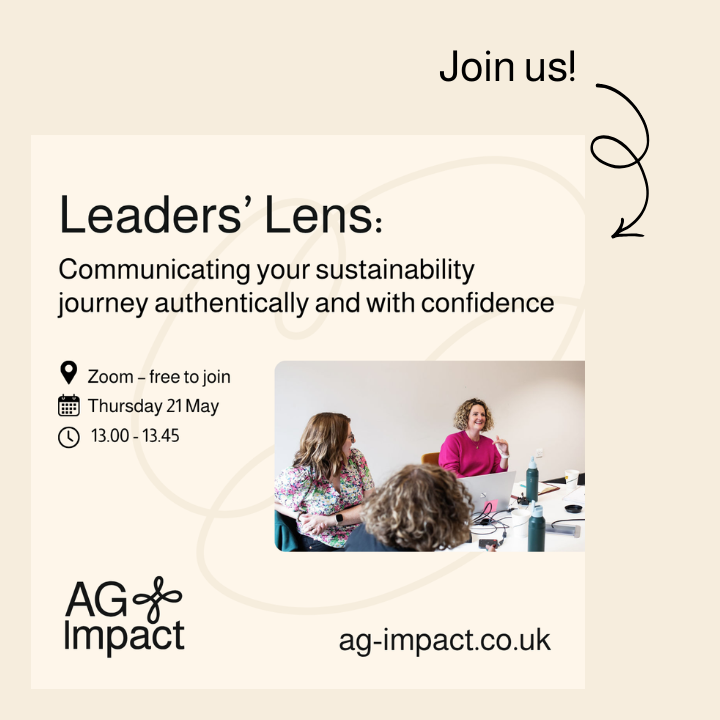
This valuable session is designed to help leaders build the confidence, judgement and capability to make – and communicate – credible commitments, speak openly about progress and limitations, and lead their organisations through rising stakeholder expectations, scrutiny and uncertainty.
Looking for expert guidance and support with your sustainability communications? Book an introductory call with Lucy here
Or contact the team at hello@ag-impact.co.uk – we would love to hear from you!
Author details

Lucy Atkinson
Executive Account Director – Communications & Impact